Upcoming Bikes
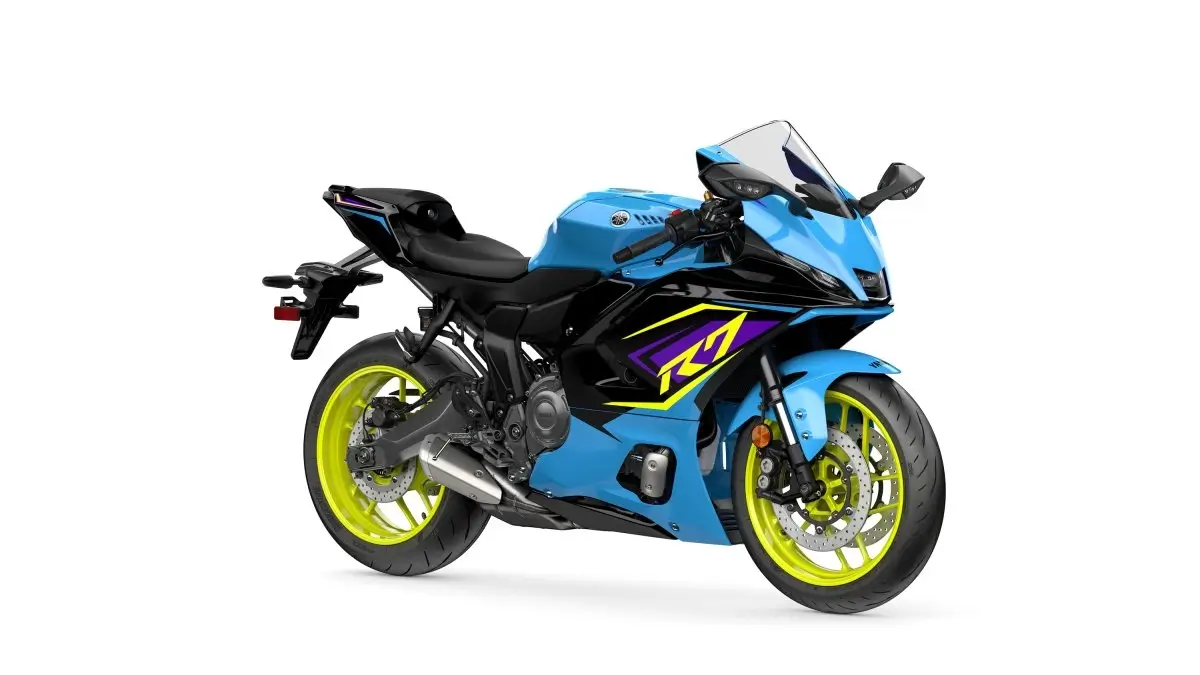
Yamaha YZF-R7
Dec 2025
About Yamaha YZF-R7
Yamaha YZF-R7: The Middleweight Supersport King Arrives - Launch, Price, and Ultimate Comparison
Title: The Return of the Legend: Yamaha YZF-R7 Launching in December 2025 – Price, Specs & Rivals
Introduction: The Middleweight Revolution is Here
For years, the Indian motorcycling landscape has seen a gap—a significant void between the highly popular 300-400cc entry-level performance bikes and the intimidating, high-cost, litre-class superbikes. Enthusiasts craving a true, focused supersport machine that is both exhilarating on a track day and manageable on a winding mountain road have been waiting patiently. That wait is about to end. The stage is set for a new legend to emerge from the 'R' stable, and its name is the Yamaha YZF-R7.
Scheduled for an eagerly anticipated launch in December 2025, the R7 is more than just a motorcycle; it’s a strategic masterpiece engineered by Yamaha to redefine the middleweight segment globally. It takes the highly successful, torquey CP2 parallel-twin engine from the MT-07 and wraps it in a stunning, razor-sharp chassis and bodywork straight out of the MotoGP paddock. This isn't just an upgrade; it's a completely new philosophy—a high-performance, accessible, and track-focused machine.
At BikeCarHub, we believe the YZF-R7 is poised to become a game-changer, appealing to riders looking to step up from their smaller R-series or Ninja machines, offering genuine supersport handling without the monstrous power delivery of a four-cylinder race replica. Let's dive deep into what makes this upcoming machine one of the most exciting launches of 2025, covering everything from its core engineering to its price and fierce competition.
Design & Styling: Inheriting the R-Series DNA
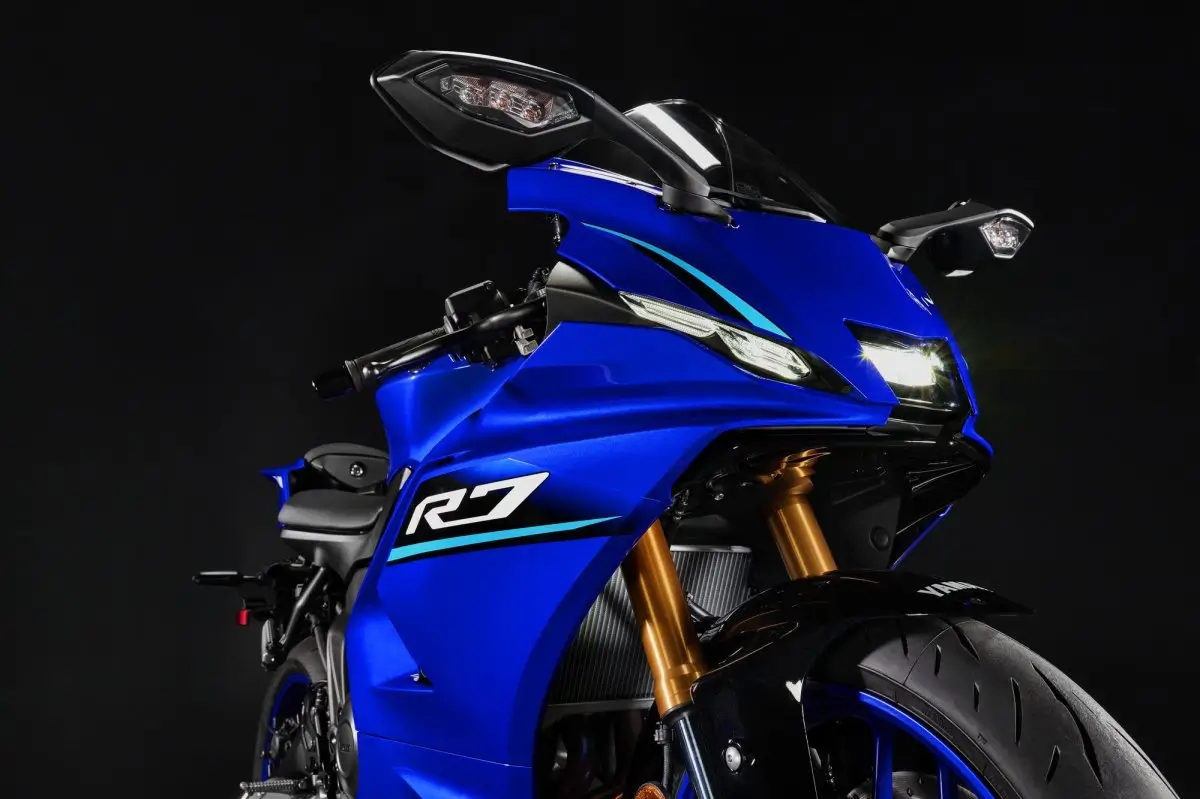
The moment one lays eyes on the Yamaha YZF-R7, its pure, unadulterated R-DNA is immediately apparent. It doesn't merely resemble a sports bike; it looks like a stripped-down, focused tool, ready to carve corners. Yamaha's designers successfully channeled the aggressive, sleek aesthetics of the flagship YZF-R1, creating a motorcycle that looks fast even standing still.
Aerodynamics and the Aggressive Face
The front fairing is undoubtedly the R7’s visual highlight. It features the signature M-shaped central air duct—a direct nod to Yamaha’s YZR-M1 MotoGP bike and the R1. In the R7's case, this duct cleverly houses a single, centrally-placed bi-functional LED headlight. This design choice contributes significantly to the bike's aerodynamic profile, ensuring optimal airflow around the rider and reducing drag at high speeds. The twin LED daytime running lights (DRLs) flanking the central duct give the bike a piercing, almost predatory gaze.
The bodywork is the slimmest in the entire R-Series family, contributing to the R7’s remarkable agility. Every panel, every crease, and every vent has been meticulously shaped to guide air, enhancing both stability and performance.
Ergonomics for Focused Riding
While the styling is aggressive, the ergonomics are finely tuned for a focused riding experience. It features low-mounted clip-on handlebars and rear-set footpegs, demanding an aggressive tuck that is perfect for track use and spirited riding. While this position is challenging for long-distance cruising or city commuting, it is precisely what an aspiring track rider desires—the perfect rider-to-machine interface for maximum control and feedback. The slim fuel tank and narrow seat base further allow the rider to grip the tank securely with their knees, improving stability during hard braking and cornering.
The Heart of the Beast: Specifications of the CP2 Engine
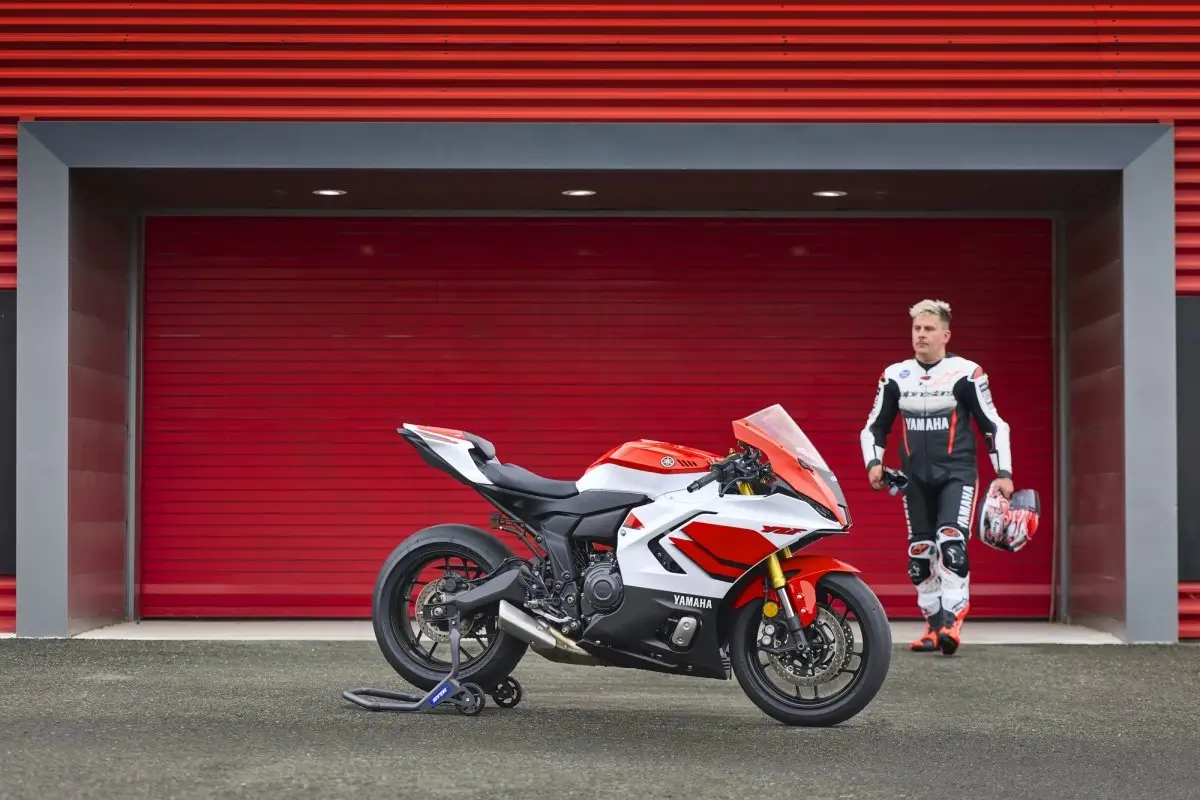
The core philosophy of the YZF-R7 lies in its engine—a motor known for its character, flexibility, and usable power. This is the famed 689cc, liquid-cooled, DOHC, inline twin-cylinder CP2 engine, borrowed from the highly successful MT-07 naked bike.
| Engine Specification | Detail |
|---|---|
| Engine Type | 689cc, Liquid-cooled, 4-stroke, 4-valve, DOHC, Inline Twin-Cylinder |
| Crankshaft | 270-degree Crossplane Concept |
| Max Power | 73.4 PS@8,750 rpm |
| Max Torque | 67 Nm@6,500 rpm |
| Fuel System | Electronic Fuel Injection |
| Transmission | 6-Speed Constant Mesh |
| Clutch | Wet, Multi-plate Assist & Slipper Clutch |
| Emission Standard | EURO5 / BS6-2.0 Compliant |
The Power of the Crossplane Concept (CP2)
What sets this engine apart is the 270-degree crossplane concept (CP2) crankshaft. Unlike a conventional parallel-twin, this design mimics the power pulses of a V-twin engine. The result is a highly irregular firing interval that delivers two key advantages:
- Phenomenal Torque Delivery: The R7 offers a strong, linear surge of torque right from the bottom end of the rev range. This means the power is always accessible and incredibly usable, making it easy to rocket out of corners without constantly rowing through the gearbox.
- Unique Exhaust Note: The 270-degree crank gives the bike a distinctive, throaty growl—a sound that is arguably more characterful and exciting than the generic inline-four scream, adding to the overall sensory experience.
With peak power of 73.4 PS and a robust torque figure of 67 Nm, the R7 doesn't chase peak horsepower numbers. Instead, it focuses on the quality of power delivery, creating a thrilling yet predictable ride that is ideal for honing track skills.
Chassis, Suspension, and Handling: Precision Engineering
While the engine is familiar, the R7's chassis and running gear are all new and track-focused, distinguishing it completely from its MT-07 sibling. This is where Yamaha engineers ensured the R7 earns its supersport moniker.
Track-Ready Suspension
The R7 boasts a high-specification, fully adjustable suspension setup. The front features a 41mm KYB upside-down (USD) fork which is adjustable for preload, rebound, and compression. This level of adjustability is a massive selling point in this class, allowing serious riders to meticulously fine-tune the front end for different track layouts or riding conditions.
At the rear, the Linked-type Monocross shock absorber is similarly adjustable for preload and rebound. This setup ensures the bike maintains exceptional stability and chassis composure, offering a predictable feel when pushing the limits on the tarmac.
Lightweight Frame and Brakes
The chassis is a slim, diamond-type (tubular steel) frame that has been optimized for rigidity and lightness. With a kerb weight of just 188 kg (wet), the R7 undercuts most of its middleweight competition, making it incredibly agile and easy to flick from side to side.
Braking duties are handled by a premium setup: dual 298mm front discs with radial-mount four-piston calipers, complemented by a single 245mm rear disc. Crucially, the system uses an ABS (Anti-lock Braking System) and is operated by a premium Brembo radial master cylinder. The combination provides superb stopping power, consistent feel, and a level of refinement usually seen on more expensive superbikes.
Price and Launch Details in India
The anticipation for the Yamaha YZF-R7 in the Indian market is palpable. Given the user's prompt and general industry speculation, the official launch is pegged for December 2025.
Pricing
The Yamaha YZF-R7 is a Completely Built Unit (CBU) or likely a high-spec CKD (Completely Knocked Down) import. This manufacturing route attracts higher import duties, which is the primary factor influencing its premium price tag.
| Detail | Specification |
|---|---|
| India Launch Date | December 2025 (Tentative) |
| Price Range (Ex-showroom) | ₹10.00 Lakh – ₹10.10 Lakh |
| On-Road Price | ₹11.5 Lakh – ₹12.5 Lakh (Varies by state RTO and insurance) |
This pricing places the R7 at a competitive, yet premium, position against its direct rivals in the 650-800cc segment. For a machine that promises such high-end components and track-focused dynamics, it represents a compelling proposition for the dedicated enthusiast.
Colour Variants: A Splash of R-World Heritage
While the final colour variants for the Indian market are yet to be officially confirmed, globally, Yamaha typically offers its R-Series bikes in iconic liveries that celebrate its racing heritage.
The two main colours to launch the bike in India are:
- Icon Blue: The quintessential Yamaha racing colour, featuring vibrant blue fairings contrasted with black wheels and silver/grey frame elements. This is the colour that screams "R-World" and is likely to be the most popular choice among buyers who want to flaunt the brand's racing lineage.
- Yamaha Black: A stealthier, all-black livery that highlights the aggressive lines and muscular proportions of the fairing. This option appeals to riders who prefer a more understated, yet equally menacing, look.
It is possible that Yamaha may also introduce special edition colours or graphics closer to the launch date, perhaps a World GP 60th Anniversary Edition or a limited-run design, depending on the brand's global strategy at the time.
Specifications & Features Comparison Table
The YZF-R7 is designed to offer a blend of accessible power and high-end chassis components. Here is a detailed look at its key specifications and features.
| Category | Specification / Feature | Detail |
|---|---|---|
| Engine | Displacement | 689 cc |
| Max Power | 73.4 PS@8,750 rpm | |
| Max Torque | 67 Nm@6,500 rpm | |
| Engine Type | Liquid-cooled, 2-cylinder, 4-stroke, DOHC, CP2 | |
| Fuel Delivery | Fuel Injection | |
| Drivetrain | Gearbox | 6-Speed Manual |
| Clutch | Assist & Slipper Clutch (Standard) | |
| Quick Shifter | Optional Accessory (Up/Down) | |
| Chassis & Suspension | Frame Type | Diamond (Tubular Steel) |
| Front Suspension | 41mm KYB USD Fork, Fully Adjustable (P/R/C) | |
| Rear Suspension | Link-type Monocross, Adjustable (Preload & Rebound) | |
| Wheelbase | 1,395 mm | |
| Ground Clearance | 135 mm | |
| Brakes & Tyres | Front Brake | Dual 298mm Hydraulic Discs, Radial calipers, Brembo Master Cylinder, ABS |
| Rear Brake | Single 245mm Disc, ABS | |
| Front Tyre Size | 120/70 ZR17 | |
| Rear Tyre Size | 180/55 ZR17 | |
| Dimensions | Kerb Weight (Wet) | 188 kg |
| Fuel Tank Capacity | 13 Liters | |
| Seat Height | 835 mm (32.9 in) | |
| Features | Console | Full Digital Instrument Console (TFT) |
| Lighting | All-LED (Headlight, Taillight, Indicators) | |
| Safety | Dual-Channel ABS |
Competitors Comparison Table: The Middleweight Turf War
The arrival of the Yamaha YZF-R7 will intensify the battle in the premium middleweight segment. Its main rivals include established inline-fours, other parallel-twins, and high-tech triples. The R7’s unique selling point is its lightweight, torque-rich engine paired with a fully adjustable, track-spec chassis.
Here is how the R7 stacks up against its closest competitors in India:
| Feature | Yamaha YZF-R7 (CP2 Twin) | Honda CBR650R (Inline-Four) | Triumph Daytona 660 (Triple) | Aprilia RS 660 (Parallel Twin) | Kawasaki Ninja 650 (Parallel Twin) |
|---|---|---|---|---|---|
| Engine Type | Inline Twin (CP2) | Inline Four | Inline Triple | Parallel Twin | Parallel Twin |
| Displacement | 689 cc | 649 cc | 660 cc | 659 cc | 649 cc |
| Max Power | 73.4 PS | 95 PS | 95 PS | 100 PS | 68 PS |
| Max Torque | 67 Nm | 63 Nm | 69 Nm | 67 Nm | 64 Nm |
| Kerb Weight (Wet) | 188 kg | 211 kg | 201 kg | 183 kg | 196 kg |
| Front Suspension | Fully Adjustable KYB USD | USD Fork (SFF-BP, non-adj) | USD Fork (SFF-BP, non-adj) | USD Fork (Adjustable) | Telescopic Fork (non-adj) |
| Rider Aids | ABS, A&S Clutch, (Optional QSS) | ABS, HSTC (Traction Control), A&S Clutch | ABS, Traction Control, Ride Modes | ABS, TC, Wheelie Control, Ride Modes, QSS | ABS, A&S Clutch |
| Ex-Showroom Price | ₹10.00 Lakh | ₹11,16,127 | ₹9,88,400 | ₹17,74,400 | ₹7,77,000 |
In-Depth Rival Analysis
The table above clearly illustrates the R7’s positioning. It is the lightest bike (barring the RS 660), yet it features the most comprehensive suspension adjustability in the sub-₹12 lakh bracket.
- VS Honda CBR650R: The Honda offers a more powerful, high-revving inline-four engine. However, the R7 is significantly lighter and offers superior, fully adjustable suspension components, making it a much sharper, more focused track tool right out of the box, as noted by experts at BikeCarHub.
- VS Aprilia RS 660: The Aprilia is the most technologically advanced and powerful in this comparison. It’s the R7’s fiercest competitor, offering more power and a full suite of electronics, but this Italian brilliance comes at a substantially higher price. The R7 offers the best value for a dedicated track chassis.
- VS Triumph Daytona 660: The Triumph offers the glorious torque of an inline-triple engine and comparable power to the Honda and Aprilia. Its pricing is aggressive. The R7 counters with its lightweight design and top-tier, fully adjustable suspension, whereas the Daytona's suspension is non-adjustable.
- VS Kawasaki Ninja 650: The Ninja 650 is the most affordable in this group, serving as a versatile sport-tourer. The R7 is a much more serious supersport machine, offering more power, far better components (USD fork, radial brakes), and a much more committed riding posture, targeting a different, more performance-oriented customer.
Anticipated Riding Experience: Track Focus Meets Street Usability
The entire design philosophy of the Yamaha YZF-R7 is to bridge the gap between street accessibility and racetrack prowess.
On the Track
For the rider looking to shave seconds off their lap time, the R7 is an absolute joy. Its low 188 kg wet weight, combined with the incredibly stiff and adjustable chassis, allows the bike to turn in with minimum effort and hold a line with laser-like precision. The fully adjustable KYB suspension is the key component here, allowing riders to tune the bike's feedback to their exact preference, maximizing cornering speed and stability. The Brembo master cylinder ensures that braking performance is sharp and consistent, giving the rider immense confidence to brake late. The optional Quick Shift System (QSS), which allows for clutchless upshifts and downshifts, will be a must-have accessory for track days.
On the Street
While primarily track-focused, the R7’s CP2 engine makes it surprisingly manageable for the street. The engine’s tremendous low- and mid-range torque means one doesn't have to constantly downshift in city traffic. It pulls cleanly from low RPMs, making city commuting less taxing than a peaky inline-four. However, riders should be mindful of the aggressive, committed ergonomics. The low clip-ons and high seat height will put pressure on the wrists and back during long, slow city rides—a standard trade-off for a true supersport machine.
Technology and Electronics: Focused and Simple
In an era of complex electronic rider aids, the Yamaha YZF-R7 takes a refreshingly focused and minimalist approach. The R7 prioritizes a mechanical connection between the rider and the machine.
Core Electronic Aids
The bike’s primary electronic aid is the essential Dual-Channel ABS, which prevents wheel lock-up during emergency braking, a critical safety feature for all riding conditions. It is rumored that Yamaha opted to keep the electronics package simple to focus the budget on the chassis components, which truly define the supersport experience. Unlike the Aprilia RS 660, the R7 does not feature traction control, wheelie control, or multiple ride modes. This demands a higher degree of rider skill, making it an excellent learning tool for proper throttle control.
Assist and Slipper Clutch (A&S)
Standard on the R7 is the Assist and Slipper Clutch (A&S). The Assist function significantly reduces the effort required to pull the clutch lever, making city riding and gear changes smoother and easier. The Slipper function prevents the rear wheel from hopping or locking up under aggressive downshifting, maintaining stability and control during spirited deceleration.
Instrumentation
The R7 is to feature a modern, Full Digital Instrument Console. While some international models use a basic LCD unit, the Indian model is highly anticipated to feature a high-visibility, full-colour TFT display to provide comprehensive information, including gear position, speed, tachometer, fuel, and trip data, alongside diagnostic alerts and potentially, smartphone connectivity.
Conclusion: The Pure Supersport Experience Awaits
The Yamaha YZF-R7 is more than just a welcome addition to the Indian market; it's a statement. It proves that a pure, focused supersport experience doesn't need to be defined solely by monstrous horsepower or overly complex electronics. Instead, the R7 celebrates the art of cornering and the joy of accessible, usable performance. By combining the charismatic, torque-laden CP2 engine with a high-end, track-focused, and fully adjustable chassis, Yamaha has created a machine that is poised to be the ultimate companion for the skilled rider looking to take their game to the next level.
For riders who prioritize razor-sharp handling, exceptional chassis feedback, and a genuinely engaging riding character over outright top speed, the R7, as analyzed by the team here at BikeCarHub ., presents an irresistible package. As the calendar inches closer to December 2025, the countdown begins for what promises to be one of the most significant and exciting premium motorcycle launches of the decade. The legend is back, and the middleweight segment is ready for its new King.
Frequently Asked Questions (FAQs) about the Yamaha YZF-R7
- Honda CBR650R
- Triumph Daytona 660
- Aprilia RS 660
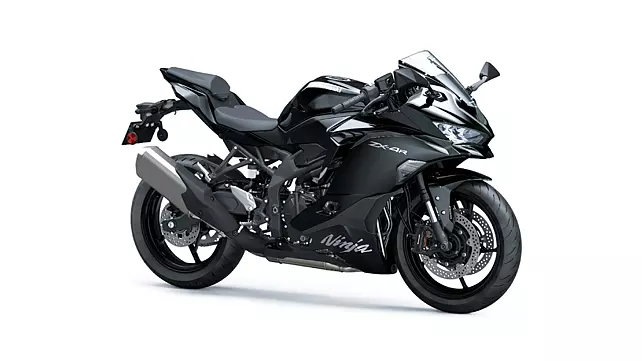
- Kawasaki Ninja 650
- Torque-rich CP2 engine
- Lightweight chassis
- Fully adjustable KYB suspension
- A pure, focused supersport experience at a competitive price



BikeCarHub | 5 Dec 2024
BikeCarHub | 29 Nov 2024


Popular Brands










































Compare Bikes