
TVS XL EV
Was expected Dec 2025 · that date has passed
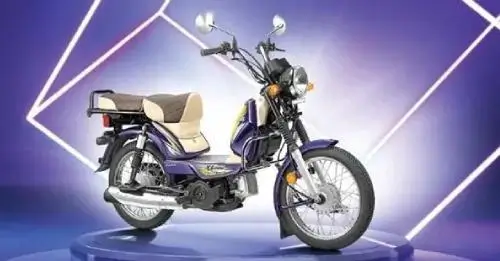
TVS XL EV Expected Launch in December 2025 – Price, Specs, Features & Full Details
The TVS XL EV is expected to bring the legendary XL utility platform into the electric era. With an expected 1.5–2 kWh lithium-ion battery, 60–80 km real-world range, 50–60 kmph top speed and a practical cargo-friendly design, it aims to become an affordable electric workhorse for Indian riders and businesses.
Introduction: The Silent Revolution of a Classic Workhorse
The TVS XL has long been known as one of India's most practical and dependable two-wheelers, serving small businesses, delivery riders and families. The upcoming TVS XL EV is expected to carry this workhorse legacy into the electric era.
The electric version is expected to combine the XL's familiar utility-focused character with silent operation, lower running costs and modern EV technology.
According to the source article, the TVS XL EV is expected around December 2025 and is positioned to target the entry-level and commercial electric two-wheeler segment.
- Expected launch around December 2025
- Electric evolution of the iconic TVS XL platform
- Designed for commercial, utility and everyday riders
- Focus on low running costs and practical usability
- Expected to strengthen the affordable electric moped segment
Design and Aesthetics of the Electric XL
The TVS XL EV is expected to retain the familiar utilitarian identity of the petrol-powered XL while incorporating design elements suited to an electric vehicle.
The lightweight underbone chassis and practical overall silhouette are expected to remain, while LED lighting and subtle EV-specific styling could modernize the appearance.
The battery is expected to be positioned under the seat or floorboard area to help maintain a low centre of gravity and preserve the vehicle's load-carrying practicality.
- Familiar XL-inspired utilitarian silhouette
- Expected LED lighting
- Lightweight underbone chassis
- Possible EV or Electric badging
- Battery placement designed to maintain stability
- Durable metal bodywork expected
Utility, Seating and Storage
Practicality is expected to remain one of the biggest strengths of the TVS XL EV. The detachable rear seat should allow the vehicle to serve as both a family two-seater and a cargo-focused work vehicle.
The large floorboard and rear luggage-carrying capability are expected to continue, making the electric XL suitable for delivery work, small businesses and daily utility use.
Its accessible design and easy mounting and dismounting should also make it suitable for riders of different ages and physical builds.
- Detachable rear seat expected
- Large utility-focused floorboard
- Cargo-friendly rear section
- Suitable for commercial and delivery applications
- Easy accessibility and maneuverability
Motor and Battery Specifications
The TVS XL EV is expected to replace the XL 100's 99.7cc petrol engine with an efficient electric drivetrain focused on instant torque, silent operation and low running costs.
The source article expects a lithium-ion battery pack between 1.5 kWh and 2 kWh. This capacity is positioned as a balance between affordability, vehicle weight and everyday city range.
A real-world range of approximately 60–80 km per charge is expected, making it suitable for short-distance commuting, deliveries and daily utility work.
- Expected lithium-ion battery
- Estimated battery capacity: 1.5–2 kWh
- Expected real-world range: 60–80 km
- Focus on efficiency and instant torque
- Possible swappable battery option for commercial variants
Charging and Everyday EV Convenience
To suit its target audience, the XL EV is expected to support convenient home charging through a portable charger connected to a standard 5A household socket.
The expected charging time from 0–80% is approximately 4–5 hours. This would make overnight or workplace charging practical for most owners.
The source article also speculates that a swappable battery solution could be introduced for selected commercial or fleet-focused variants.
- Portable home charger expected
- Standard 5A household socket compatibility
- Expected 0–80% charging time: 4–5 hours
- Possible commercial swappable-battery variant
- Designed to reduce downtime for utility riders
Motor Performance and Transmission
The electric motor is expected to prioritize efficiency and strong initial torque, which is important for carrying cargo and accelerating from a standstill.
Expected continuous motor output is around 1.5–2 kW, approximately 2–2.7 bhp. The top speed is expected to be electronically limited to around 50–60 kmph.
Like other electric two-wheelers, the XL EV is expected to use a seamless single-speed automatic transmission, eliminating the need for a clutch or manual gear changes.
- Expected motor output: 1.5–2 kW
- Approximate power: 2–2.7 bhp
- Strong instant torque for load carrying
- Expected top speed: 50–60 kmph
- Single-speed automatic transmission
Modern Features and Connectivity
The XL EV is expected to introduce practical modern features while maintaining the affordable value proposition of the XL range.
A digital or semi-digital instrument console is expected to display information such as speed, battery charge, remaining range and trip details.
Higher variants could receive Bluetooth or app connectivity, navigation assistance, charging-station information and ride statistics. USB charging and anti-theft or geo-fencing features may also be offered.
- Digital or semi-digital instrument console
- Battery, range and trip information
- Optional Bluetooth or app connectivity
- USB charging port
- Expected Eco and Power riding modes
- Possible anti-theft alarm and geo-fencing
Riding Dynamics, Suspension and Safety
The TVS XL EV is expected to continue the rugged mechanical approach associated with the XL family. The source article expects telescopic hydraulic front suspension and a rear swingarm with hydraulic shock absorbers.
Drum brakes are expected at both ends, supported by Synchronized Braking Technology or a Combi-Braking System. Regenerative braking is also expected to assist deceleration while recovering a small amount of energy.
Despite the battery pack, expected kerb weight is around 85–95 kg, supporting easy maneuverability in crowded streets and tight spaces.
- Telescopic hydraulic front suspension
- Rear swingarm with hydraulic shocks
- Front and rear drum brakes
- Expected SBT or CBS
- Regenerative braking
- Expected kerb weight: 85–95 kg
Price, Variants and Launch Details
The expected price of the TVS XL EV is between ₹60,000 and ₹70,000 ex-showroom, positioning it as an accessible electric utility vehicle.
The source article expects two possible variants: a basic utility-focused version with a smaller battery and limited digital features, and a higher-spec variant with a larger battery, digital console, LED lighting and possible smart connectivity.
The expected India launch timeline mentioned in the article is December 2025, followed by wider availability through TVS's dealer network.
- Expected price: ₹60,000–₹70,000 ex-showroom
- Possible base utility-focused variant
- Possible higher-spec heavy-duty EV variant
- Expected launch: December 2025
- Expected expansion through TVS's dealer network
Expected Colour Options
The source article expects the TVS XL EV to combine practical colours with at least one shade intended to emphasize its electric identity.
The anticipated options include Starlight Blue, Heavy-Duty Black, Coral Red and Metallic Silver or Grey.
- Starlight Blue
- Heavy-Duty Black
- Coral Red
- Metallic Silver / Grey
TVS XL EV vs TVS XL 100
The biggest transformation is the move from a petrol-powered 99.7cc engine to an electric drivetrain. The XL EV is expected to offer silent operation, instant torque, automatic single-speed riding and lower day-to-day running costs.
The XL 100 continues to offer quick petrol refuelling and the familiar internal-combustion platform, while the EV version is expected to focus on range, home charging and modern digital features.
Competition and Market Position
The TVS XL EV is expected to enter the growing electric utility two-wheeler segment, with the Kinetic Green E-Luna identified in the source article as its primary rival.
It may also compete indirectly with affordable electric scooters such as the Ola S1 Z and entry-level models from Hero Electric and Komaki.
The XL EV's expected strengths are the established XL name, practical load-carrying design, widespread service reach and a focus on low-cost utility.
The Expected Riding Experience
The transition to electric power is expected to deliver a quieter and more refined experience than the petrol-powered XL. Reduced vibration could lower rider fatigue during long hours of commercial or delivery use.
Instant electric torque should provide easier acceleration from a standstill, including when carrying a pillion or heavy cargo.
The expected light weight and low centre of gravity should help maintain the XL's reputation for easy handling in narrow lanes, crowded markets and dense city traffic.
- Silent and low-vibration operation
- Instant torque for city riding and cargo
- Expected kerb weight below 100 kg
- Easy maneuverability
- Comfortable upright riding position
- Designed as a practical business and utility tool
Future Outlook and Market Impact
The source article presents the TVS XL EV as a potentially important move toward affordable electric mobility, particularly for small businesses, delivery riders and budget-conscious families.
By electrifying a well-known utility platform, TVS could help expand electric two-wheeler adoption beyond premium scooters and into the commercial and grassroots transportation market.
Conclusion
The TVS XL EV is expected to combine the proven utility of the XL platform with the advantages of electric mobility. Its expected 1.5–2 kWh battery, 60–80 km real-world range, practical cargo design and affordable ₹60,000–₹70,000 price positioning could make it an attractive option for everyday and commercial use.
While the final specifications, variants and launch schedule will depend on official confirmation, the source article positions the XL EV as a significant upcoming electric moped designed to deliver familiar practicality with cleaner and quieter transportation.
Expected Battery and Performance Specifications
| Feature | Expected Specification | Benefit |
|---|---|---|
| Battery Type | Lithium-ion | Balance of efficiency, weight and durability |
| Battery Capacity | 1.5–2 kWh | Suitable for city and utility use |
| Real-World Range | 60–80 km per charge | Adequate for daily commuting and deliveries |
| Motor Power | 1.5–2 kW | Efficient urban performance |
| Top Speed | 50–60 kmph | Utility-focused performance |
| Transmission | Single-Speed Automatic | Simple clutch-free riding |
Expected Charging Details
| Feature | Expected Specification | Practical Advantage |
|---|---|---|
| Charging Method | Portable Charger | Convenient everyday charging |
| Socket Type | Standard 5A Household Socket | No dedicated charger expected for basic use |
| Charging Time | 4–5 Hours for 0–80% | Suitable for home or workplace charging |
| Swappable Battery | Possible on Commercial Variants | Reduced fleet downtime |
Expected Features: TVS XL EV vs TVS XL 100
| Feature | TVS XL EV | TVS XL 100 | Utility Improvement |
|---|---|---|---|
| Power Source | Electric Motor | 99.7cc Petrol Engine | Silent operation and lower running cost |
| Instrument Cluster | Digital / Semi-Digital | Analogue / Semi-Digital | Displays charge, range and trip data |
| Transmission | Single-Speed Automatic | Automatic Centrifugal Wet Clutch | Simpler EV operation |
| Riding Modes | Expected Eco and Power | None | Range or torque-focused operation |
| USB Charging | Expected | Available on Some Variants | Useful for commuters and delivery riders |
| Security | Possible Anti-Theft / Geo-Fencing | Basic Ignition Lock | Enhanced commercial-use protection |
Expected Price and Variant Details
| Variant | Expected Price Position | Expected Focus |
|---|---|---|
| Standard / Base Variant | Lower end of ₹60,000–₹70,000 range | Smaller battery and basic utility features |
| Heavy-Duty / Premium EV Variant | Higher end of ₹60,000–₹70,000 range | Larger battery, digital console, LED lighting and possible smart features |
Expected Colour Options
| Colour | Theme |
|---|---|
| Starlight Blue | Electric-inspired vibrant appearance |
| Heavy-Duty Black | Classic commercial and utility look |
| Coral Red | Bright option for personal buyers |
| Metallic Silver / Grey | Neutral finish emphasizing durability |
TVS XL EV vs TVS XL 100
| Specification / Feature | TVS XL EV | TVS XL 100 |
|---|---|---|
| Fuel Type | Electric | Petrol |
| Expected Price | ₹60,000–₹70,000 | ₹43,900–₹59,800 |
| Motor / Engine | Electric Motor (1.5–2 kW) | 99.7cc Single-Cylinder, 4-Stroke |
| Maximum Power | Approx. 2–2.7 bhp | 4.3 bhp @ 6000 rpm |
| Transmission | Single-Speed Automatic | Automatic Centrifugal Wet Clutch |
| Top Speed | 50–60 kmph | 60 kmph |
| Range / Mileage | 60–80 km per charge | 55 kmpl |
| Energy Storage | 1.5–2 kWh Lithium-ion Battery | 4-Litre Fuel Tank |
| Charging / Refuelling | 4–5 Hours for 0–80% | Instant Petrol Refuelling |
| Expected Kerb Weight | 85–95 kg | 88–89 kg |
Expected Competitor Comparison
| Feature | TVS XL EV | Kinetic Green E-Luna | Hero Electric Optima |
|---|---|---|---|
| Price | ₹60,000–₹70,000 | ₹69,990–₹82,490 | ₹83,300–₹1.04 lakh |
| Body Type | Electric Moped / Utility | Electric Moped / Utility | Electric Scooter |
| Range | 70–80 km expected | 110–120 km claimed | 89–135 km claimed |
| Top Speed | 50–60 kmph | 50 kmph | 55 kmph |
| Battery | 1.5–2 kWh Li-ion | 1.7–2.2 kWh Li-ion | 2.2 kWh Li-ion |
| Target Audience | Commercial, Utility and Entry-Level Commuters | Commercial and Rural Commuters | Urban and General Commuters |
Frequently Asked Questions
{
question: "When is the TVS XL EV expected to launch in India?",
answer: "According to the source article, the TVS XL EV is expected to launch in India around December 2025, although the final timeline will depend on official confirmation."
},
{
question: "What is the expected price of the TVS XL EV?",
answer: "The expected ex-showroom price is between ₹60,000 and ₹70,000."
},
{
question: "What battery and range can be expected from the TVS XL EV?",
answer: "The article expects a 1.5–2 kWh lithium-ion battery with an estimated real-world range of around 60–80 km per charge."
},
{
question: "How fast can the TVS XL EV go?",
answer: "The expected top speed is around 50–60 kmph."
},
{
question: "What are the main competitors of the TVS XL EV?",
answer: "The Kinetic Green E-Luna is identified as the primary competitor, along with affordable electric scooters such as the Ola S1 Z and entry-level models from Hero Electric and Komaki."
},
{
question: "Will the TVS XL EV have a detachable or swappable battery?",
answer: "The source article suggests that the base version may use a standard battery and portable charger, while swappable battery technology could be considered for commercial variants."
},
{
question: "What new features could the XL EV offer over the petrol XL 100?",
answer: "Expected upgrades include a digital or semi-digital console, electric motor, USB charging, LED lighting, possible riding modes and lower running costs."
},
{
question: "Will the TVS XL EV retain its load-carrying capability?",
answer: "Yes. The article expects the XL EV to retain the cargo-friendly floorboard, detachable rear seat and practical utility-focused design associated with the XL platform."
},
{
question: "What is the expected charging time?",
answer: "The expected charging time from 0–80% is approximately 4–5 hours using a standard household charging solution."
},
{
question: "Will the TVS XL EV receive government subsidies?",
answer: "Eligibility for any government incentive will depend on the final certification, specifications and applicable policy at the time of launch."
}